







August Farm News, 2026
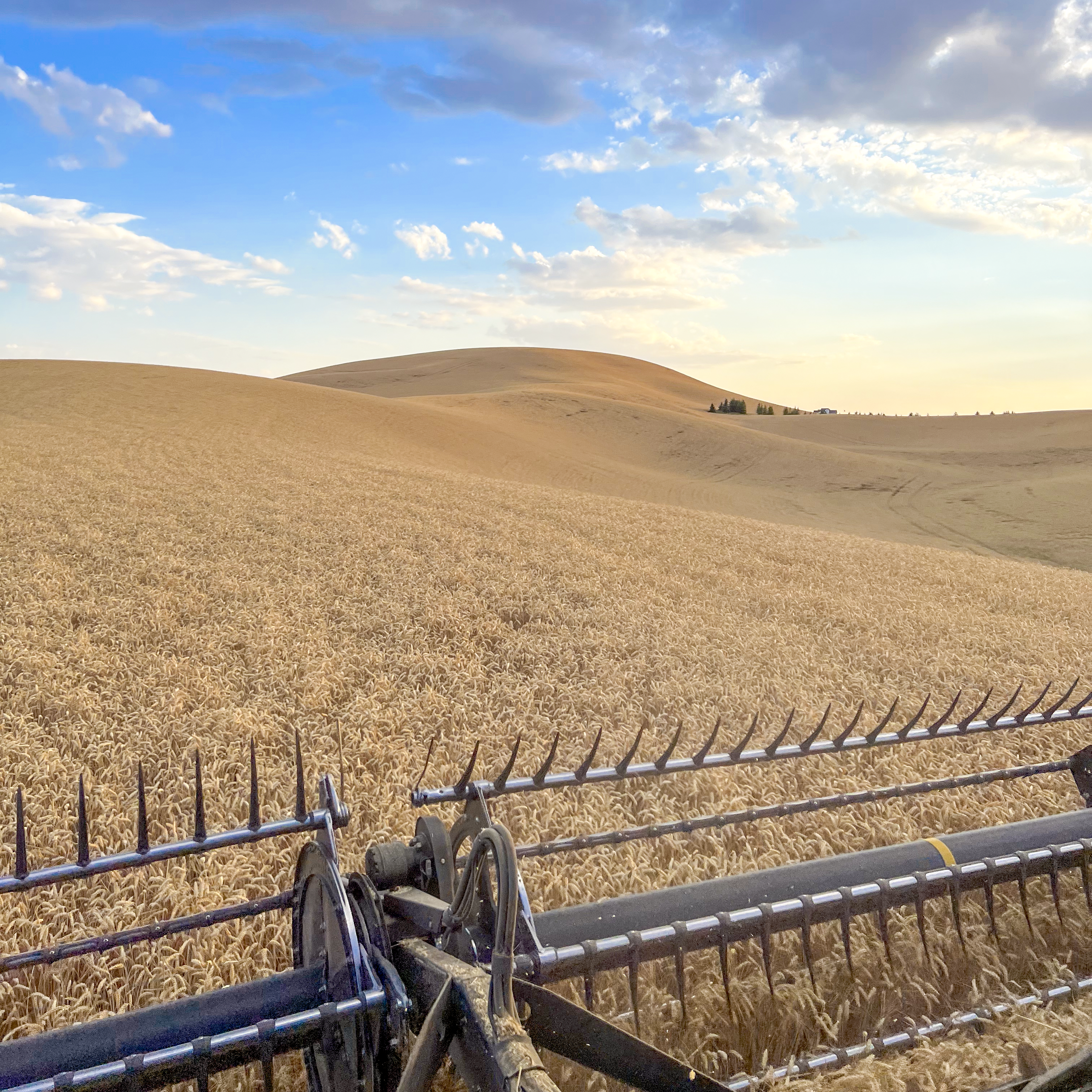
If you’ve lived around the Palouse for even a single summer, you know the signs. The emerald rolling hills of June slowly cure into a bright amber by late July. The air dries out, the sky opens wide, and the distinctive hum of heavy machinery echoes across Whitman County. Harvest season has arrived!
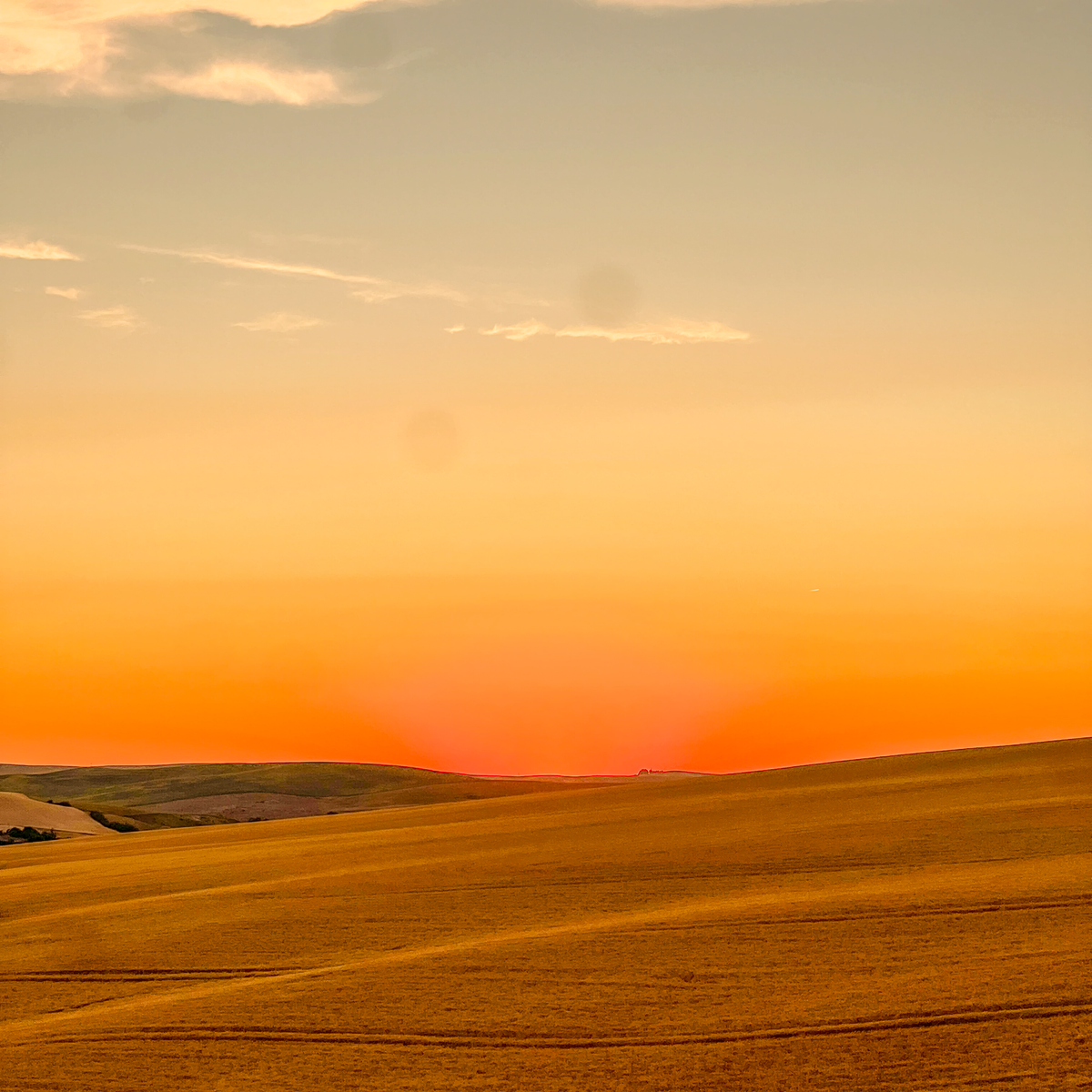
Gold dust on the hills
While residents and visitors alike marvel at the landscape—not unlike a golden ocean frozen mid-swell—few get a front-row view of the engineering, environmental variables, and raw endurance required to bring in Washington state's world-renowned wheat crop. Let’s take a deeper dive behind the cab glass to see how one of the region's most iconic agricultural traditions actually unfolds.

Defying gravity: the marvel of hillside combines
To the untrained eye, driving a combine through a flat wheat field looks straightforward enough. But farming the Palouse is a completely different discipline. With slopes frequently exceeding 40 percent, standard farm equipment would simply tip over or dump its entire load of grain straight out the back onto the hill.
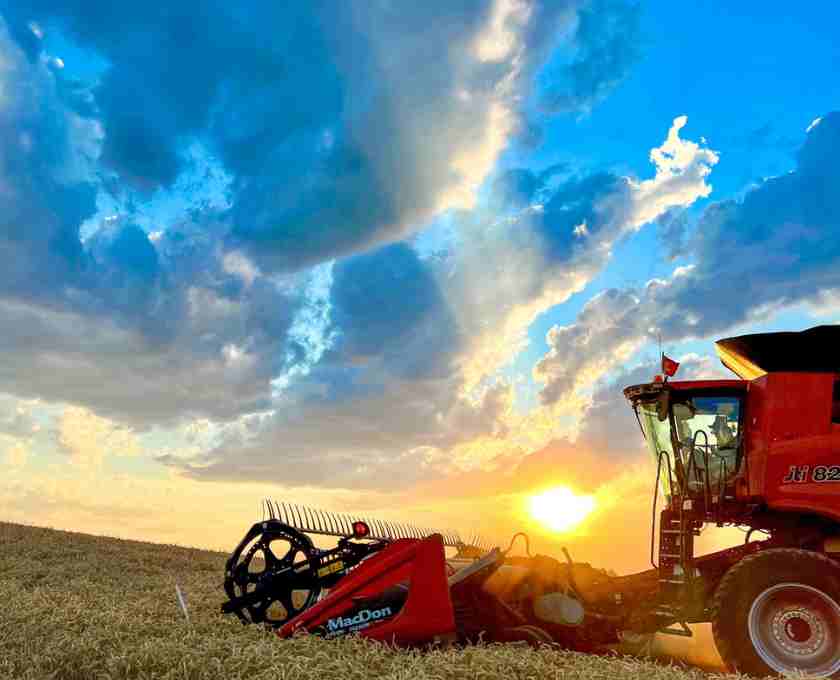
Enter the hillside combine—a remarkable feat of mechanical engineering. Outfitted with heavy-duty hydraulic leveling systems (pioneered right here in the Pacific Northwest in the mid-1900s), these modern leviathans continuously monitor terrain tilt. As the tires crawl along the dune-like ridges, automatic hydraulic rams tilt the main body and grain tank of the combine to keep them level, even while the header follows the sharp contour of the ground.

The mechanics of leveling
Modern combines can automatically level up to a 45 percent slope. This keeps grain evenly distributed across internal cleaning shoes and separator grates. Without this active balance, grain would slide to one side, clogging the threshing mechanism or spilling unthreshed heads directly onto the hillside.
Operating one of these machines requires continuous concentration. Banked on a 40-degree incline, operators are suspended high above the ground, trusting complex hydraulics while steering a 30-ton rig within inches of steep drop-offs. It is equal parts heavy machinery operation and fine-art navigation.

The double-edged sword of wildfire smoke
In recent years, late summer on the Palouse has increasingly coincided with the PNW's wildfire season. While locals notice the eerie red sun and hazy horizons, wheat farmers track atmospheric smoke for reasons that go far beyond aesthetics. Smoke affects wheat crops in subtle, complex, and sometimes counterintuitive ways:
1. Sunlight filtering during grain fill. If wildfire smoke rolls in during late June or early July—while the wheat kernel is actively filling—it reduces active photosynthetic radiation. Although diffuse light can sometimes penetrate lower canopy layers, heavy particulate smoke shades the crop, slowing down grain development and potentially reducing test weight and yield.
2. High humidity and delayed harvesting. Wildfire smoke frequently traps lower atmospheric moisture, raising ambient humidity levels and dropping daytime temperatures. The wheat's moisture content must drop below 12 percent before it can be safely cut and stored in grain elevators without rotting or increasing risk of spontaneous combustion. While the cooler temps are nice for the crew, a long string of smoky, hazy days can slow the dry-down of grain, delaying the start of cutting.
3. Operational hazards and equipment wear. In intense fire years, or when the fires are very close by, ash fallout becomes a concern. It can settle on dry crop canopy, causing extra wear on machinery air filters and intake systems. Furthermore, intense smoke clouds create severe visibility hazards for combine operators navigating precarious ridges and bank drops.

The 24/7 harvest ballet
When conditions line up—low humidity, dry wheat, and clear skies—harvest becomes a non-stop, multi-vehicle dance. Combines cut precise swaths along the contours, filling their 410-bushel onboard tanks in minutes. Grain carts towed by high-horsepower tractors pull alongside moving combines, receiving grain on the fly without stopping the header. From there, the wheat is transferred into waiting semi-truck trailers usually stationed closer to the access roads, which then make endless loops to our local elevators or down to the Almota barge terminals on the Snake River.

A season worth celebrating
When you see the dust plumes rising off the hills this August, take a moment to appreciate what’s happening beneath that golden haze. It’s a masterclass in agricultural innovation, resilience against unpredictable smoke weather, and sheer grit on some of the steepest farmland in the world.
Next time you pass a hillside combine running smoothly along a steep ridge, give a wave to the operator. They’re working long hours on hot and dirty days to bring in the crop that feeds millions across the globe, right from our own backyard. As we say out here, yield to combines and thank a farmer.
Cheers, friends! See you in the next one.

Read more
If you walk out into the fields right now and take a deep breath, you can practically smell it: harvest is on the horizon. For anyone who makes a living from the dirt, this time of year is always a...
Here at Palouse Brand, harvest isn't just a busy time of year, it is the culmination (and hopefully celebration!) of 12 months of dedication, dynamic planning, and a deeply-rooted passion for growi...



Leave a comment
All comments are moderated before being published.
This site is protected by hCaptcha and the hCaptcha Privacy Policy and Terms of Service apply.